Bats
Bats are beneficial insect-eaters - a single colony devours thousands of mosquitoes a night - but when they move into your attic they leave behind guano, odor, and a real health hazard. In Florida they're also legally protected, so getting them out has rules.
How to Identify Bats
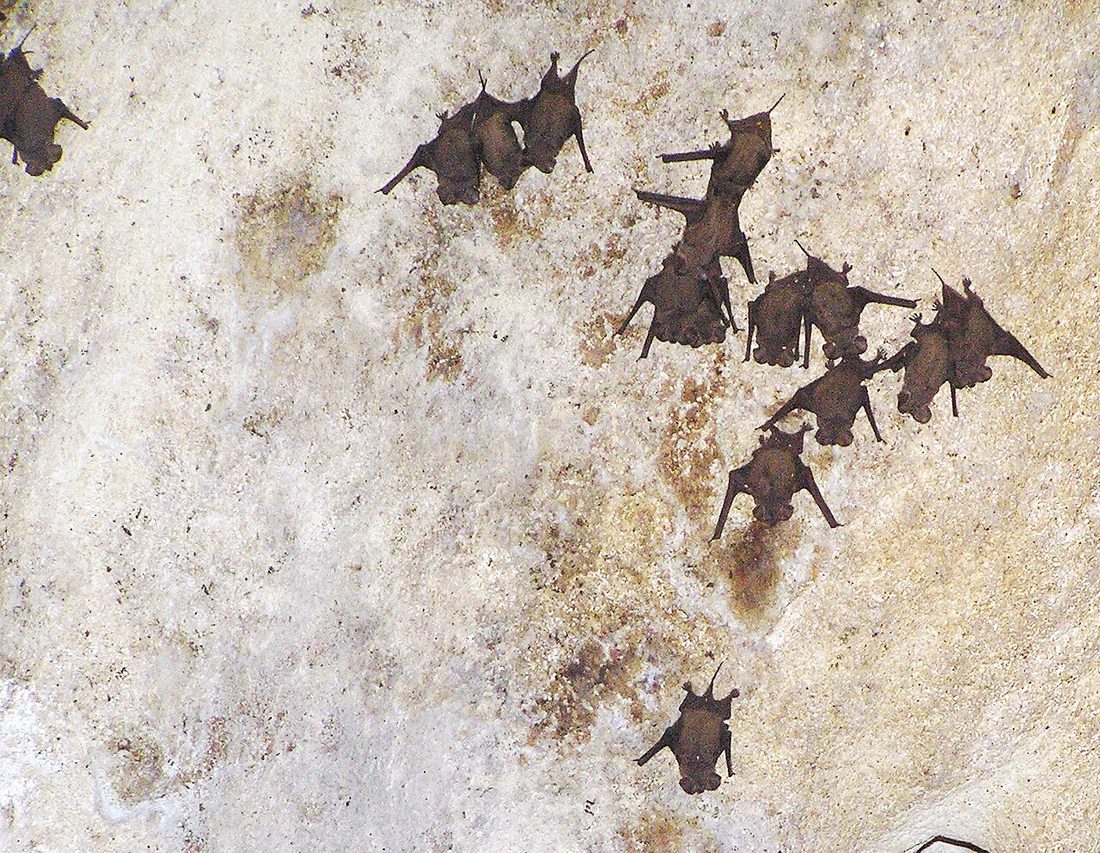
Florida's most common attic bat is the Brazilian (Mexican) free-tailed bat - a small brown bat with a wingspan around 11 inches. Evening bats and big brown bats also roost in structures. You'll rarely see them by day; they emerge at dusk to feed.
Why They're a Problem in Florida
Bats squeeze through gaps as small as 3/8 inch near the roofline, gable vents, soffits, and ridge caps, then roost together in warm, dark, undisturbed attics. Colonies return to the same roost and grow year after year if they aren't excluded.
The risk: Bat guano can harbor Histoplasma, a fungus that causes the respiratory illness histoplasmosis, and it soaks into insulation and drywall. Bats can also carry rabies, so they should never be handled, and parasites like bat bugs can follow them indoors.
Signs of Bats
- Piles of dark, crumbly guano below a roofline gap
- Brown grease-staining around entry points
- An ammonia smell in the attic or upstairs rooms
- Chittering or scratching at dusk
- Bats seen flying out from the roofline at sunset
When They're Active
Active year-round in Florida. By law, exclusions can only be done outside maternity season - that is, roughly August 15 through April 15.
Prevention Tips
- Seal gaps at the roofline, soffits, and gable vents (3/8 inch or larger)
- Cap the chimney and screen attic and gable vents
- Repair loose ridge caps, fascia, and flashing
- Never seal an active roost during maternity season - flightless pups get trapped inside
How Taps Gets Rid of Bats
Our licensed local technicians target bats at the source with pet- and family-safe treatments, backed by our 100% satisfaction guarantee. See our treatment & pricing →
Bats - FAQs
Are bats protected in Florida?
Yes. All Florida bat species are protected, and it is illegal to harm them or to exclude them during maternity season (April 16-August 14). Legal removal is done by humane one-way exclusion outside that window.
How do I get bats out of my attic?
Bats are removed with humane one-way exclusion devices that let them leave to feed but not return, followed by sealing every entry point and cleaning the guano - all timed around Florida's maternity-season law. See our bat removal & exclusion service for how it works.
Is bat guano dangerous?
It can be. Accumulated guano can grow Histoplasma, a fungus whose spores cause the respiratory illness histoplasmosis, and it soaks into insulation and drywall, leaving odor and staining. That's why cleanup and sanitizing - not just removing the bats - is part of doing the job right, and why you shouldn't disturb it yourself.
Why can't I just seal the entry point when I see bats leave?
Two reasons. During maternity season, flightless pups are left inside while the mothers feed - sealing the gap traps and kills them, which is both illegal and creates a far worse odor and cleanup problem. And bats use multiple gaps, so sealing one just sends them to another. Proper one-way exclusion, timed legally, is the only reliable way.
How do you keep bats from coming back?
After the colony is excluded, we seal every potential entry 3/8 inch and larger along the roofline, soffits, vents, and ridge caps, and screen or cap the vulnerable spots. Because bats return to the same roost year after year, that full exclusion - not just eviction - is what makes it permanent.
Get Rid of Bats for Good
Get your free, no-obligation quote today.