Fire Ants
Red imported fire ants are one of the most aggressive pests in Florida yards. Disturb a mound and hundreds swarm out to deliver painful, burning stings.
How to Identify Fire Ants
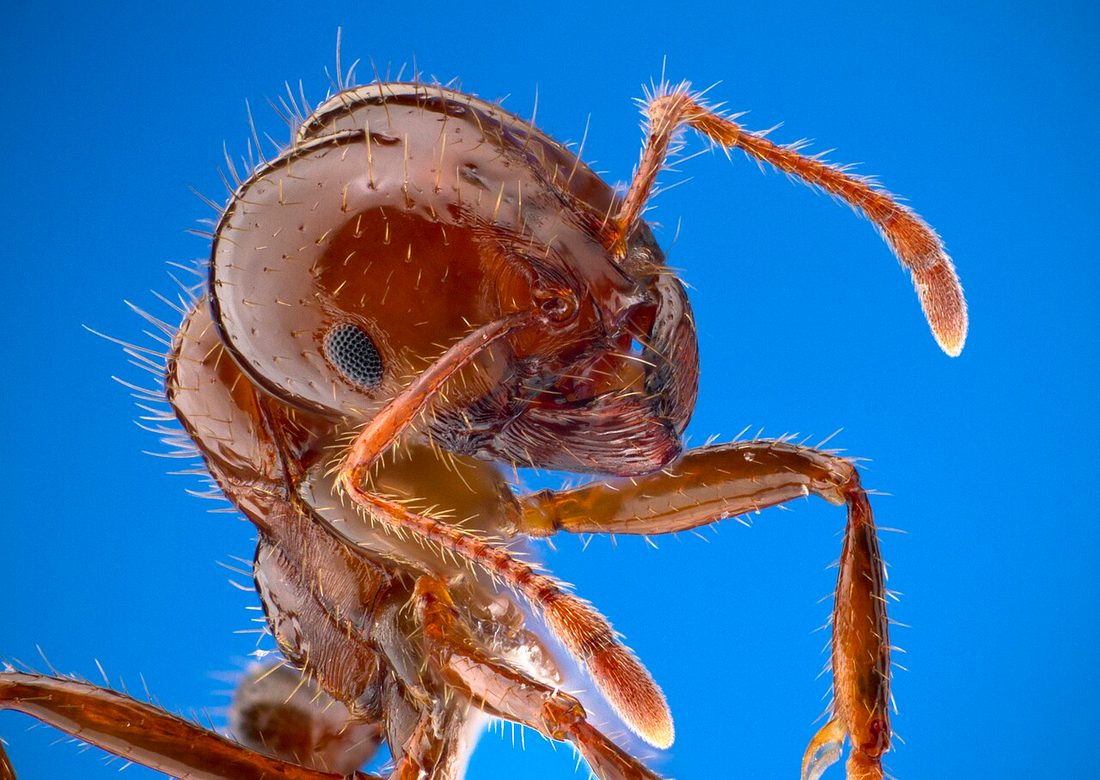
Small reddish-brown ants, 1/8-1/4 inch, that build dome-shaped dirt mounds with no visible entry hole in sunny, open areas of the lawn.
Why They're a Problem in Florida
Florida's warm, wet climate lets fire ant colonies thrive year-round, especially in new-construction and disturbed soil. A single colony can hold 200,000+ ants with multiple queens.
The risk: Their stings burn and blister, and can trigger dangerous allergic reactions in sensitive people, children, and pets.
Signs of Fire Ants
- Dome-shaped dirt mounds in the yard
- Aggressive swarming when disturbed
- Clusters of painful, blistering stings
When They're Active
Active year-round in Florida; most visible after rain in spring and summer.
Prevention Tips
- Keep grass mowed and remove debris
- Fix drainage and standing water
- Don't disturb mounds without treatment (they relocate)
How Taps Gets Rid of Fire Ants
Our licensed local technicians target fire ants at the source with pet- and family-safe treatments, backed by our 100% satisfaction guarantee. See our treatment & pricing →
Fire Ants - FAQs
How do I get rid of fire ants for good?
Fire ants need a two-step approach - direct mound treatment plus a broadcast bait across the whole yard to reach hidden satellite colonies. Treating only the visible mound just makes them relocate a few feet away.
Why do fire ants come back after I pour boiling water or use store-bought killer?
Home remedies and mound-drench products only kill the ants you can see. If the queen survives deeper in the colony - or there are multiple queens, which is common in Florida - the colony rebuilds or simply moves. Eliminating the queen(s) is what actually ends the problem.
How dangerous are fire ant stings?
Most stings cause a burning welt and a white pustule that can last days. But some people, children, and pets have serious allergic reactions - swelling, hives, or trouble breathing - which is a medical emergency. Because reactions can escalate, a yard with active mounds is a real risk if you have kids or pets.
Will fire ants come inside my house?
They can. Fire ants forage indoors for food and water, and after heavy rain or flooding they'll move colonies toward structures and even into wall voids. Keeping a treated exterior barrier is the best way to stop them before they get inside.
How long does professional fire ant treatment last?
A properly baited and treated yard typically stays clear for the season, but Florida's climate lets new colonies blow in and start fresh - so ongoing exterior service is what keeps a yard reliably fire-ant-free year-round.
Get Rid of Fire Ants for Good
Get your free, no-obligation quote today.